Why You Can Game for Hours but Can't Focus on a Jira Ticket
Friday, 9 January 2026
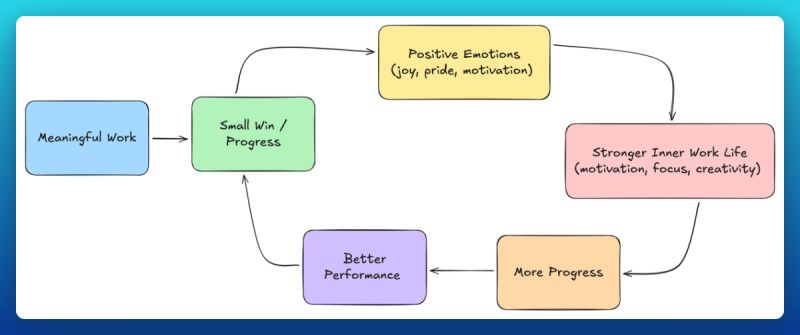
We can grind a video game for hours without blinking, yet struggle to focus on a Jira ticket for 30 minutes. It’s not a discipline problem. It’s a feedback loop problem.
I realized this after reading The Progress Principle. Video games mastered the “small win” loop decades ago. You get XP for everything: finding a map, crafting a potion, talking to an NPC. The progress is visible, instant, and constant.
Software engineering, by default, is a “feedback desert.”
You might code for three days straight with zero external reward. No level-up sound, no loot drop. Just you, the IDE, and a silent cursor until a PR finally merges. That silence kills momentum because your brain isn’t getting the dopamine hits it needs to stay engaged.
So, a few months ago, I started treating my daily workflow like an RPG to fix the loop.
Micro-Quests over Boss Fights
If a ticket takes more than a day, it’s too big to be a single task. Some tasks are a boss fight. You don’t start there. I break it down into 20-minute chunks: “Define data model,” “Build view hierarchy,” “Mock API response.” These are easy achievements. They keep the momentum moving.
Visual XP
I physically check these off. It sounds trivial, but seeing a list of ten crossed-out items creates a visual history of effort.
In games, you see your XP bar fill up. In dev work, you need to build your own progress bar. If you don’t visualize the work, it feels like you did nothing all day.
Mana Management
Deep work drains your mana bar. You can’t spam your ultimate ability for 8 hours straight without consequences. When I hit a wall, I don’t force it. I take a “cooldown.” A walk, a coffee, a context switch. Treat rest like a mechanic, not a failure.
If you’re dreading a massive feature, stop trying to beat the boss in one hit with a level 1 weapon.
Design your own small wins and save your progress.