Wednesday, 15 April 2026
I live in Germany. My family is in Brazil. Every year I book that flight and every year I sit down with the credit card convinced I paid too much.
For a long time, the routine was the same. Open Google Flights in January. Screenshot the price. Reload the next morning. Reload the day after. Forget for a week. Come back to find the fare had climbed 200 euros and book it anyway because I needed the ticket before Christmas.
I built FareHawk to stop doing that. This is why.
The tab of shame
A round-trip Frankfurt to São Paulo in economy is the single most expensive thing I buy in a year. More than my rent. More than any piece of hardware on my desk. Somehow, my process for buying it was “check the price every morning and hope.”
I tried the trackers. One started pinging me about routes I’d searched once and forgotten. Another sent me email digests that felt like newsletters. Google Flights has a “set a price alert” feature that sent me an email, once, into the promotions tab, where I found it three weeks later after the fare had climbed back up.
The specific missed drop: 180 euros. My inbox has 12,000 unread emails. You see the problem.
What I actually wanted
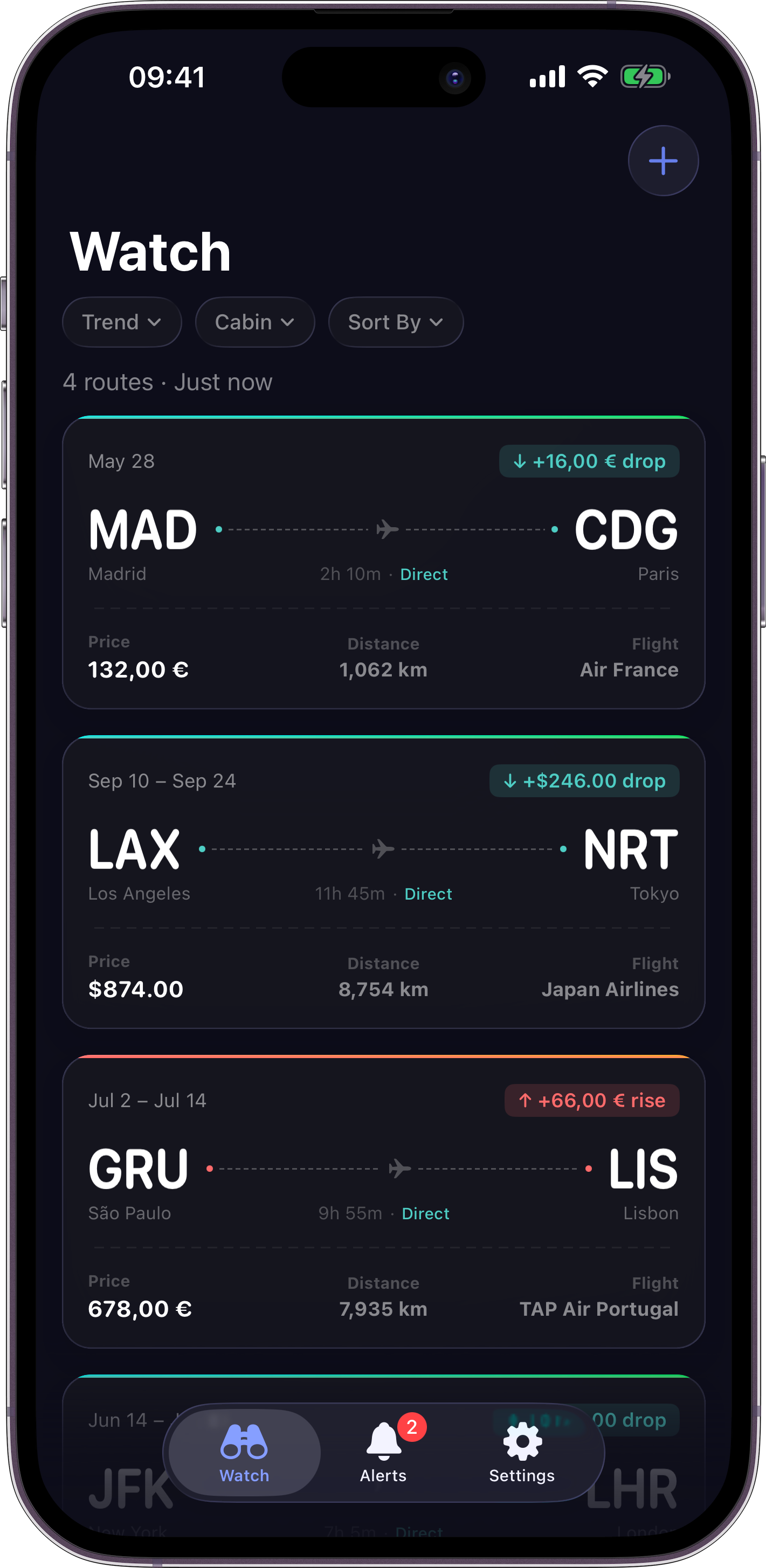
The brief was small. One route. One push on my lock screen when the fare crossed a line I cared about. Nothing else. No newsletters. No “deals” for Bangkok when I’m trying to fly to Brazil. No account to create. No subscription to remember to cancel.
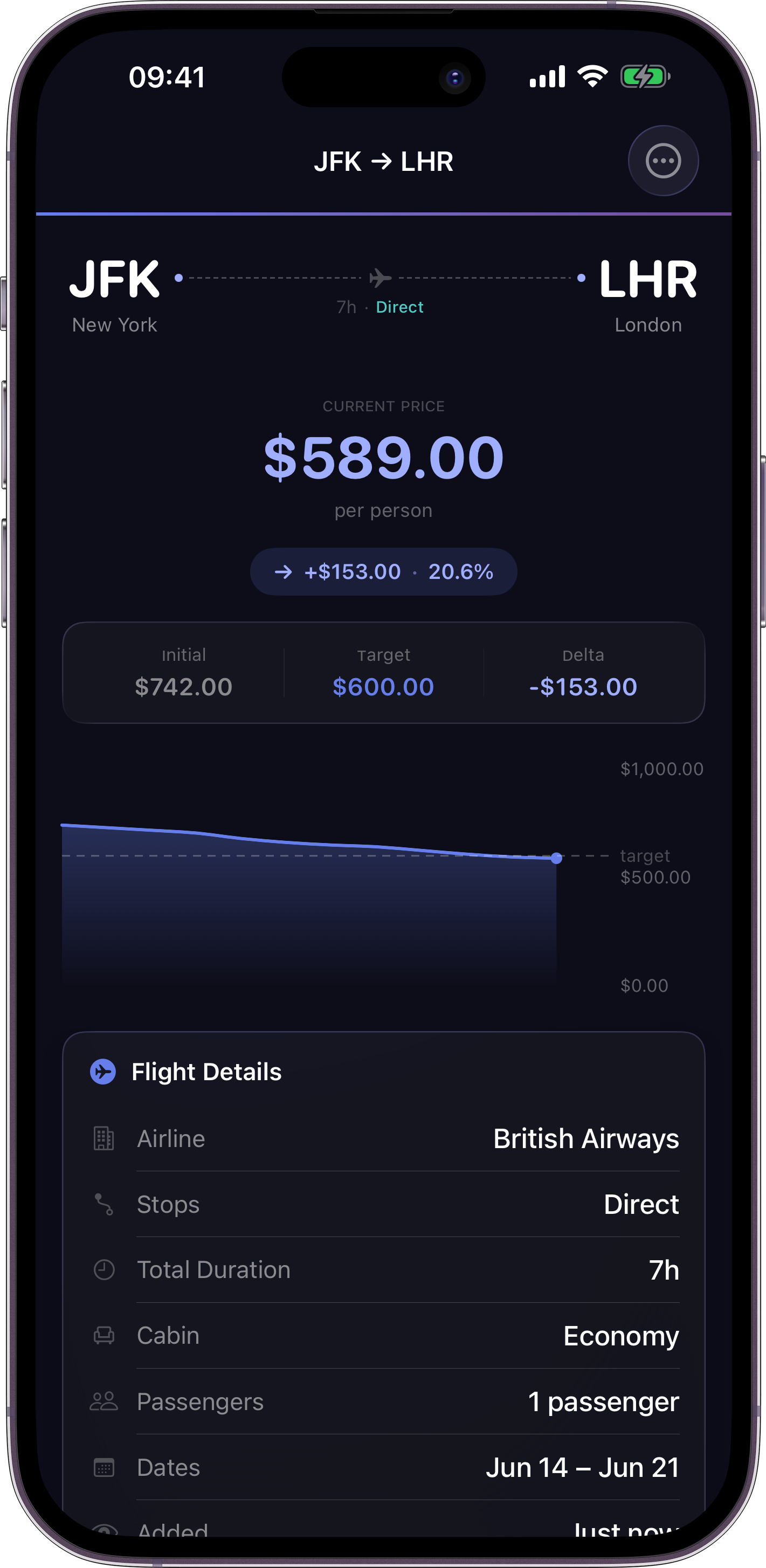
And I wanted the history. A chart. Fourteen days of what the price has actually done, so when a notification lands saying “down 150 euros,” I can glance at the line and decide whether this is a real floor or just a bounce.
Four things:
- A push notification on my phone.
- A threshold I choose.
- Fourteen days of the route’s price history, drawn on a chart.
- No account.
None of the existing apps did all four. So I built one.
How it works
Four steps:
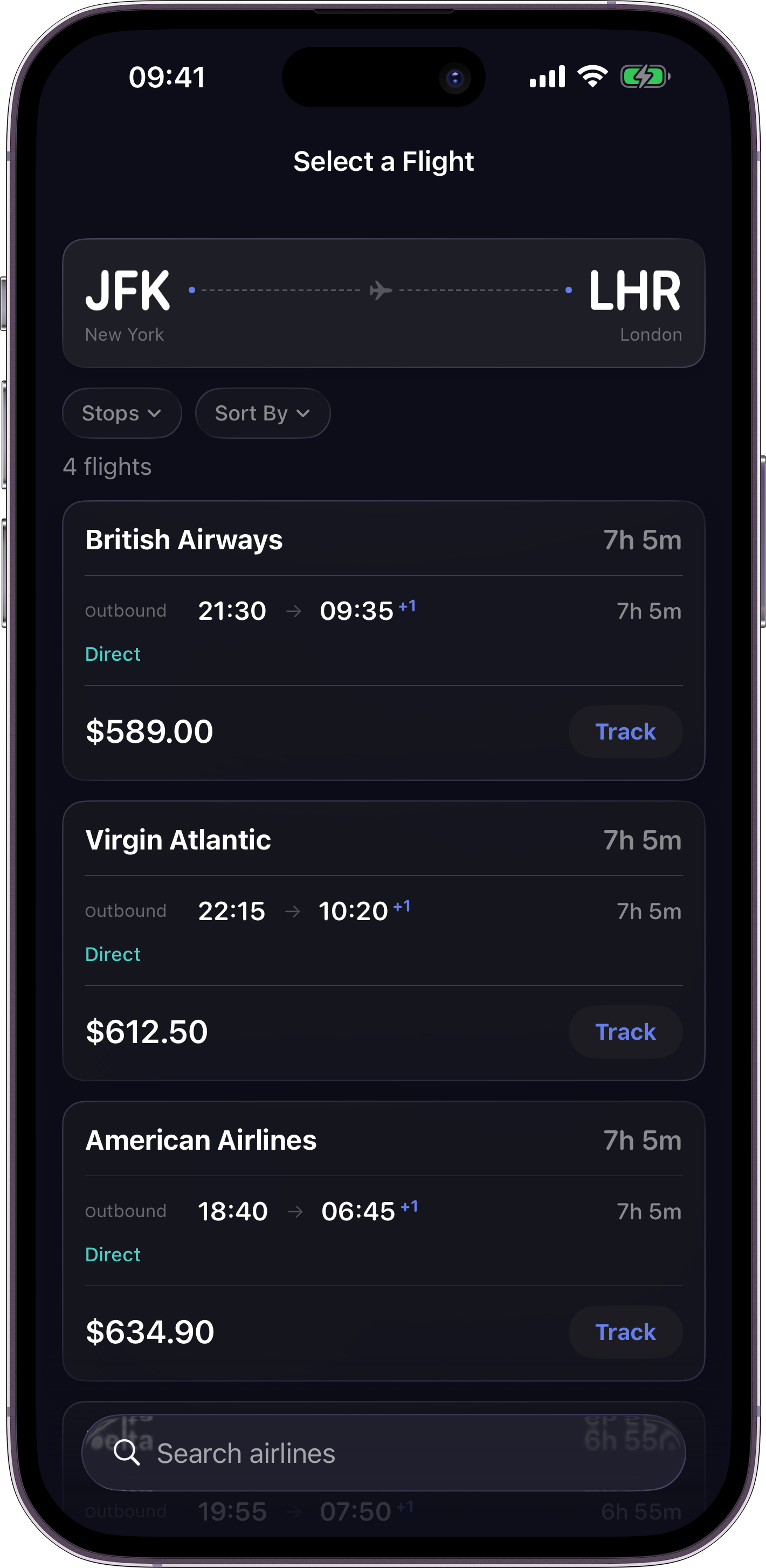
- Add the route. Origin, destination, dates, cabin, passengers, currency, and an optional target price.
- A backend service polls the fare on a schedule and keeps a rolling 14-day history per route.
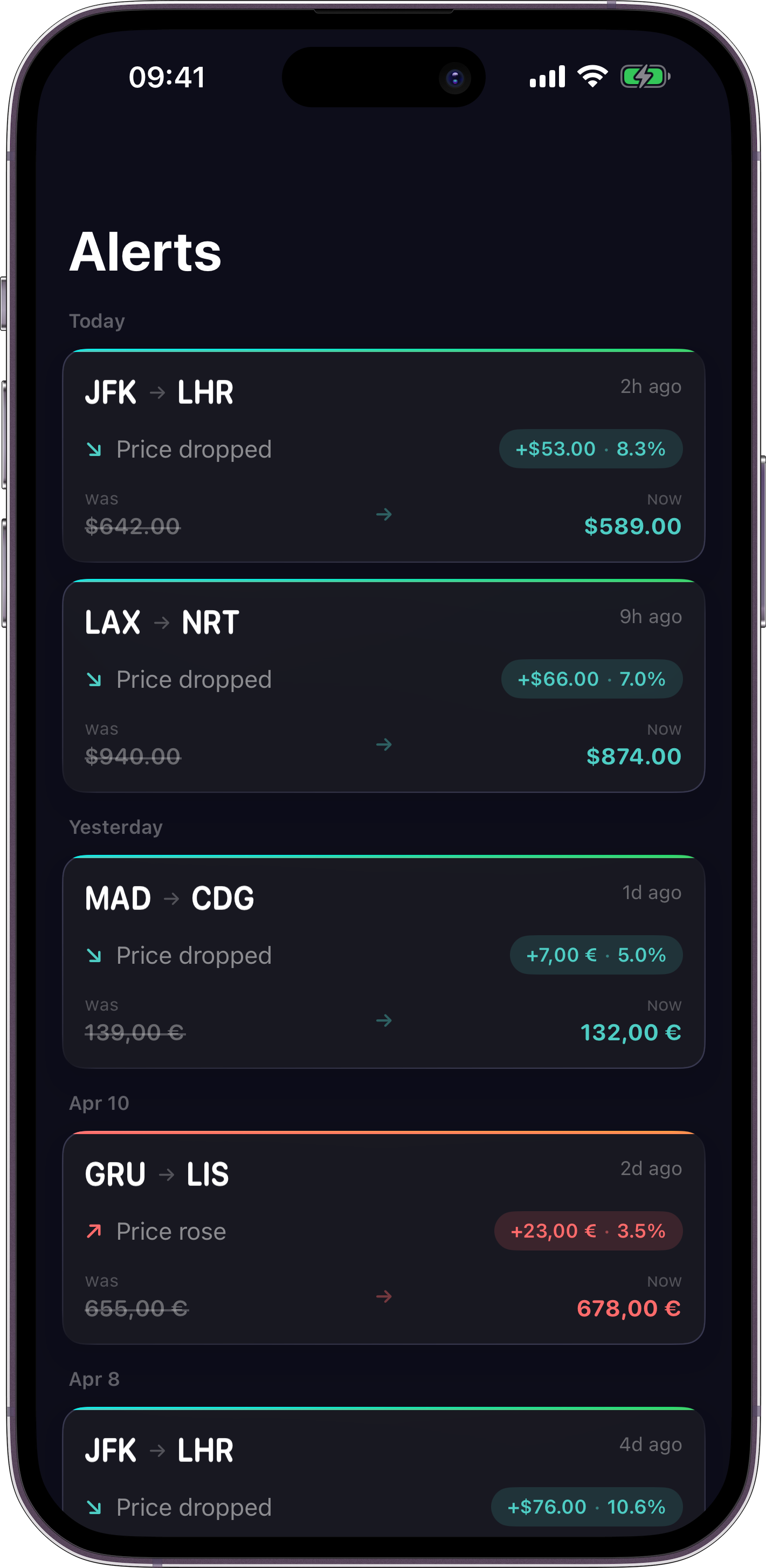
- When the price crosses your target, drops past the floor, or jumps past the ceiling, you get a push notification.
- Tap the push and Google Flights opens with airports, dates, and cabin pre-filled. Book on whoever you already trust.
The whole watchlist syncs across your Apple devices, so your routes follow your Apple ID. Install FareHawk on a second iPhone or an iPad and the watchlist appears.
The moment that convinced me to ship
I kept FareHawk private for a while. Used it myself, fixed bugs, argued with myself about whether it was good enough.
Then I gave a TestFlight build to a few friends who also fly home for Christmas. Within a couple of weeks, one of them got a notification that his Lisbon route had dropped 150 euros. He booked it that evening. A week later, another friend got a 200 euro drop on Madrid and did the same.
That was the moment I stopped second-guessing. If the thing I built saved two friends 350 euros between them before I’d even launched, it was probably useful to somebody else too.
What I deliberately did not build
The “no” list is longer than the “yes” list.
- No account, no sign-in, no email capture. The watchlist lives in your iCloud private database.
- No analytics vendor, no ad SDK, no attribution tracker.
- No subscription. One App Store purchase, unlimited routes, forever.
- No affiliate booking flow. Tapping through to Google Flights is a plain deep link. FareHawk has no incentive to steer you toward a specific airline or OTA.
- No social features, no shared watchlists, no friend graph.
Each of those was a real decision. They are all standard SaaS playbook moves, and every one of them would have made the product worse for me.
Who it is for
Travelers who already know roughly when and where they want to fly, and who want one honest signal when the price moves. FareHawk is not a meta-search engine, not a loyalty program, not an itinerary manager. It watches a fare and tells you when it changes.
Try it
If you also book a flight home once a year and spend three months wondering whether you are timing it badly, this is the app I made for you, accidentally.